
Chinglish signs: English in China, part one
Chinglish is English which has been inaccurately translated into Chinese. I always thought its prevalence on signs and notices in China was overstated. Until, that is, I visited to China for myself in 2009. Here are five of the best examples I spotted on that three week trip.
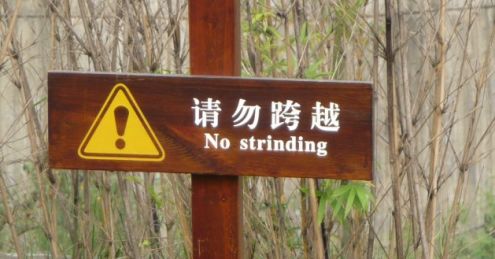
1. No strinding
Spotted at Chengdu Panda Base. Please, please drop me a line if you know what this means.
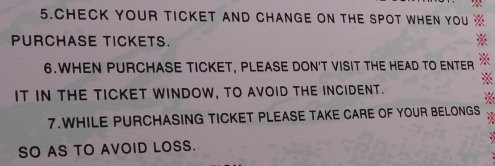
2. Don’t visit the head
If you happen to visit the Great Wall at Mutianyu, make sure you don’t lose your head. Or something.
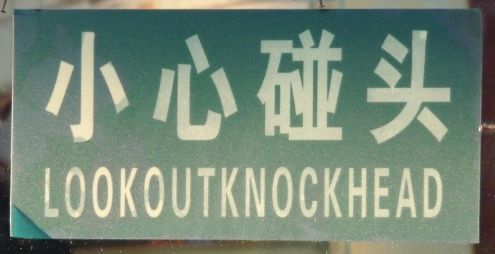
3. LOOKOUTKNOCKHEAD
There must be a lot of concern for people’s heads. Spotted at the Summer Palace.
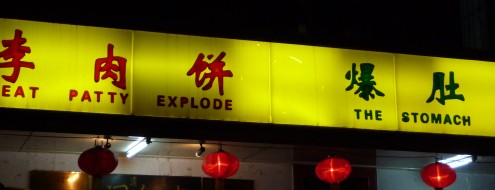
4. Avoid this restaurant
I think I had a curry with similar after-effects once.
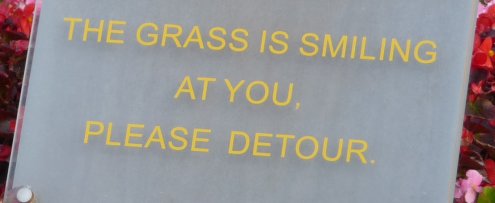
5. The grass is smiling
The Olympic Park in Beijing has various friendly signs encouraging you not to do things.
Don’t forget to check back soon for part two…
1. No crossing
2. No idea unless I see its Chinese version.
3. Don’t bump your head.
4. Meat pie
5. Chinese is addicted with poetry.
Hi nkk- thanks for the comment, and for the clarification. I’ve been wondering about ‘no strinding’ for nearly 18 months now!
I rather like ‘the grass is similing at you’ actually; much better than ‘KEEP OFF THE GRASS’!
You are welcome to visit my Chinglish blog which I have archived a few hundred of Chinglish signs and provide a correct translation for all of them. http://www.chineseenglish.com
The grass is smiling at you is just an example, there are many similar humorous signs in China. As long as they use correct English, I think that should be fined.
[…] week or so ago I posted a bunch of badly-translated signs I spotted while on holiday in China in 2009. Here’s the second […]